
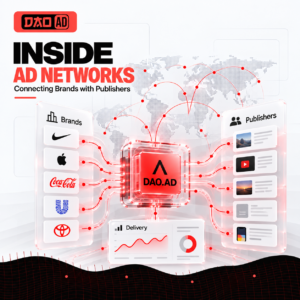


Inside Ad Networks: Connecting Brands with Publishers
This material will help you better understand the ad network meaning. We'll explain everything in simple terms and without unnecessary theory. You'll quickly understand how everything works. We'll cover key points and provide examples.
Table of Contents
- This material will help you better under...
- Breaking Down the Concept of Ad Networks
- Inside the Mechanics of Ad Network Operations
- A Closer Look at Ad Network Categories
- Why Publishers Turn to Ad Networks
- How Advertisers Benefit from Ad Networks
- What Sets Ad Networks and Exchanges Apart?
- Understanding DSPs, SSPs, and Ad Networks
- Where Ad Networks Fit in Programmatic
- Choosing an Ad Network That Matches Your Goals
Breaking Down the Concept of Ad Networks
Ad network is a service that puts together advertisers and web portals. It helps brands to display ads and website owners to earn money. Simply, it's an intermediary between those who sell ads and those who place them.
An ad network is a system that combines advertising spaces from different websites and distributes them among advertisers. It simplifies the advertising process because companies don't need to arrange with each website separately, and website owners don't need to manually search for advertisers.
Advertising on such a network allows you to display advertisements to the desired audience on websites, applications, and other online platforms. The system helps select the audience and placement.
The first ad networks emerged in the early days of the internet, when ads were placed directly. This process was time-consuming and required extensive manual work. Ad networks simplified advertising placement and made the market more accessible.
Inside the Mechanics of Ad Network Operations
To better understand the process, you need to understand the general scheme. Ad network joins advertisers and web portals in a single system. It manages impressions and helps select which ads to show to users.
- The website owner adds ad spaces. This is called inventory. They submit them to the advertisement network.
- The system collects offers from different websites, thus creating a common pool of platforms.
- The advertiser gives the parameters (audience, budget, and ad format).
- Algorithms match the request with available spaces, taking into account user interests and context.
- The ad server selects a suitable website to display the advertisement and sends the ad there. The ad is then displayed to the user on that website at the right time.
This is how the online advertising network operates. On one side, platforms with traffic. On the other, brands seeking an audience. The advertisement network connects them and automates the process.

A Closer Look at Ad Network Categories
The ad network ecosystem offers various models, each of them addresses different challenges. One digital advertising network might work with broad audiences (another may focus on narrow niches). An advertising network helps to distribute advertisements across platforms and select the appropriate format for each of them. Every advertisement network differs in scale, traffic quality and targeting method.
Broad-Reach Horizontal Advertising Platforms
Horizontal advertisement networks work with topics simultaneously. They provide broad reach and high traffic volume. This advertisement network is suitable for mass campaigns and brand conversance. Advertisers gain access to a variety of websites without strong niche restrictions.
Niche-Focused Vertical Advertising Solutions
Vertical are focused on an exact industry. This could be finance, gaming, medicine, or other sectors. This advertisement network helps to more accurately plan the target audience. Advertising campaigns become more effective due to relevance. Publishers also benefit because they receive more expensive and relevant ads.
High-End Premium Advertising Marketplaces
Premium networks work only with trusted, high-quality websites. They emphasize brand safety and stable traffic. These advertisement networks are often used by large companies. Placement quality is more important than impression volume in premium advertisement networks. It helps to build user’s trust and to improve advertising effectiveness.
Format-Driven Specialized Ad Network Options
Specialized networks work with specific advertising formats (video, mobile). This ad network allows for more definite targeting of ad getting with the user's device and behavior. This improves campaign results. Publishers receive tools to monetize their content in a convenient format and tailored to their specific audience.
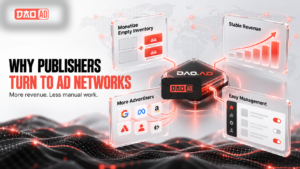
Why Publishers Turn to Ad Networks
Publishers use advertisement networks to simplify advertising and earn more consistently from traffic. Even spaces that are difficult to sell directly begin to generate revenue. An advertiser network helps attract more advertisers and better fill inventory.
- Monetization of empty spaces: an advertisement network fills unused blocks and increases revenue without additional costs.
- More stable revenue: multiple advertisers reduce dependence on a single revenue source.
- More advertisers: the network opens access to new brands and markets.
- Easier management: automated delivery saves time and resources.
As a result, an ad network makes revenue more consistent and predictable, which is especially important in a competitive digital environment.
How Advertisers Benefit from Ad Networks
The ad network gives advertisers the ability to conveniently launch campaigns across multiple platforms simultaneously. It helps them to reach multiple channels faster and saves time on setup.
- Wide audience reach: advertisements appear on many websites simultaneously, quickly increasing brand awareness. It increases the chances of attracting the right users.
- Centralized management: advertisers manage all campaigns in one system and control the process from a single interface. This simplifies advertising.
- Budget savings: advertisers pay only for impressions or actions that actually occur. This helps avoid unnecessary expenses.
- Analytics and optimization: a couple of click and conversion data reveals what works best and allows for quick ad improvements. This increases campaign effectiveness.
As a result, a digital ad network makes campaigns more transparent.
What Sets Ad Networks and Exchanges Apart?
Ad exchange is an open marketplace with a real-time auction. There, ad opinions are sold through the RTB mechanism. In contrast, an advertisement network bundles ad space into ready-made packages and sells them to advertisers, providing accession to them and managing the distribution of impressions.
Ad networks are often chosen when simplicity and manageable placement are important. Advertisement networks also help reduce the complexity of advertising and launch campaigns faster without extensive technical setup.
| Parameter | Ad Exchange | Ad Network |
|---|---|---|
| Model | Open real-time bidding (RTB) | Curated inventory packages |
| Control | Fully automated bidding | Partially managed placement |
| Approach | Maximum flexibility | Simplicity and ease of use |
| Best for | Programmatic trading at scale | Fast campaign setup and managed delivery |
Understanding DSPs, SSPs, and Ad Networks
In the programmatic sphere, DSPs and SSPs play various roles. A Demand-Side Platform was created to purchase impressions (by advertisers). A Supply-Side Platform helps publishers to sell their advertising inventory. Advertisement networks sit between them and simplify interactions by combining traffic and campaigns into ready-made solutions.
An advertisement network often uses a DSP to participate in RTB auctions and expand reach. In this case, an online advertising network acts as a simplification layer between complex systems and users. It makes the advertising process more accessible and manageable.
| Element | Role | For Whom |
|---|---|---|
| DSP | Buying ads through auctions | Advertisers |
| SSP | Selling ad inventory | Publishers |
| ad network | Intermediary with ready-made packages | Both sides |

Where Ad Networks Fit in Programmatic
In programmatic advertising, ad networks occupy a middle ground between fully automated platforms and more manual advertisement setup. Unlike RTB auctions, where each ad space is purchased in real time, advertisement networks often sell pre-packaged impression packages. It is easier to understand and implement, but less suitable for deep flexibility and fine-tuning.
The ecosystem includes DSPs and SSPs: advertisers use DSPs to purchase traffic, and publishers use SSPs to sell ad space. An advertisement network might act as an intermediary connecting different platforms and facilitating audience access, but it offers less flexibility and requires more manual configuration than a DSP.
Choosing an Ad Network That Matches Your Goals
Choosing the right advertisement network requires evaluating technical capabilities and business objectives. Different platforms are suitable for different purposes, so it's important to consider the advertiser and publisher perspectives.
- Network size and quality. Assess the scale of the ad network: the number of platforms, geography, and reputation. A large network provides reach, but it's important to ensure high-quality traffic.
- Diversity of ad formats. A usual advertiser network supports banners, video and mobile formats, allowing you to test different approaches.
- Targeting capabilities. An advertisement network allows you to customize your audience (based on interests, behavior, geography, and devices). A good advertisement network makes targeting more precise.
- Compatibility with programmatic and RTB ads. The ad network should support integration with DSPs and automated purchasing in the advertisement network's online system. This helps launch campaigns faster and manage RTB auctions.
- Transparency and analytics. An online advertising network gives reports on impressions, number of clicks, and conversion level. This helps to optimize campaigns and increase revenue.
Selecting the suitable ad network helps to reach the audience more accurately and spend your budget more efficiently.
Frequently asked questions
-
So What Exactly Does an Ad Network Handle?
Advertising platforms are tools to publish advertisements online. These systems help you create, target and measure. They can be search, social and programmatic platforms that link various advertising channels.
-
What Makes Ad Networks and Exchanges Different?
Ad networks sell ads in packages and in advance. Ad exchanges conduct auctions in real time mode. Each advertisement displayed is purchased individually, and the exchange offers more flexibility (while the network remains easier to use).
-
What Makes Vertical Ad Networks Unique?
Vertical advertisement networks are nets that focus on a single topic or niche (finance, gaming, or medicine). They display advertisements to a more relevant audience.
-
Can Small Businesses Rely on Ad Networks?
Yes. Small businesses can easily use them, even without experience. No complex setup or technical knowledge.
-
Which Ad Network Types Should You Know?
Various types of advertisement networks differentiate by scale and goals. Some networks reach a broad audience, while others focus on niche or premium platforms.
-
How Marketers Interpret the Term Ad Network?
An advertisement network is a system that connects web portals and advertisers. It assists advertisers to place ads through a single platform and simplifies the campaign launch process.
-
What Happens Inside Online Ad Networks?
An ad network collects advertisement space from different sites and combines them into a single system. It displays ads to users based on data and algorithms to automate much of the process.